

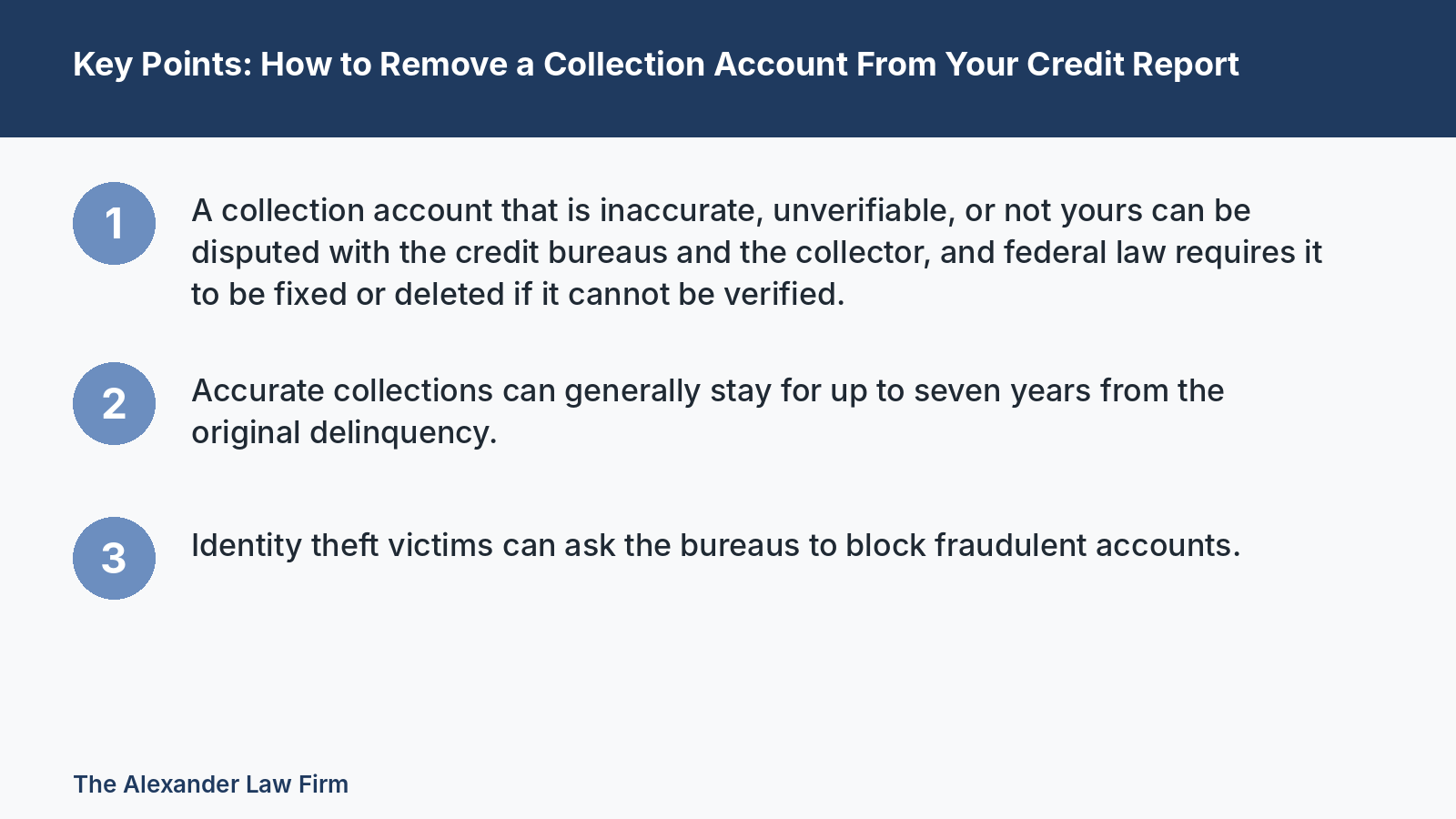
An inaccurate, unverifiable, or incorrect collection account can be disputed with the credit bureaus and the collector, and federal law requires it to be corrected or deleted if it cannot be verified. Accurate collections can generally stay for up to seven years from the original delinquency. Identity theft victims can ask the bureaus to block fraudulent accounts.
Reviewed by Adam Alexander, attorney at The Alexander Law Firm. Last reviewed November 2026.
A collection account that is inaccurate, unverifiable, or not yours can be disputed with the credit bureaus and the company that reported it, and the Fair Credit Reporting Act requires it to be corrected or deleted if it cannot be verified. Accurate collection accounts generally can remain for up to seven years from the original delinquency, though some can be removed through negotiation, payment programs, or bureau policies for certain medical debts. Identity theft victims can request that fraudulent accounts be blocked.
Collection accounts can lower credit scores, raise interest rates, and affect housing and job applications. Many Michigan consumers find collections they do not recognize, debts they already paid, or accounts reported with the wrong dates or balances. Those errors are fixable.
Common Collection Account Errors
Error | What It Looks Like |
|---|---|
Not your debt | An account belonging to someone with a similar name or a result of identity theft |
Paid or settled debt still shown as unpaid | A balance remains after payment or settlement |
Duplicate reporting | The same debt appears from both the original creditor and a collector, each showing a balance |
Wrong delinquency date | The date is changed, keeping the account on your report longer than allowed |
Wrong balance | Fees or amounts that are not owed are included |
Debt discharged in bankruptcy | The account still shows a balance due |
Step 1: Get Your Reports
Request your reports from all three major credit bureaus and compare how each one shows the collection. Errors often appear on one or two reports but not all three.
Step 2: Dispute With the Credit Bureaus
File a written dispute with each bureau reporting the error. Explain what is wrong, include copies of supporting documents, and keep proof of what you sent. The bureau generally must investigate within 30 days and forward your dispute to the company that reported the account. Our guide to disputing inaccurate credit walks through the process.
Step 3: Dispute With the Collector
You can also dispute directly with the collection agency. Under federal debt collection law, if you dispute the debt in writing within the validation period described in the collector’s initial notice, the collector must stop collection until it provides verification. A collector that cannot validate the debt should not continue reporting it as accurate.
Step 4: Address Identity Theft
If the collection resulted from identity theft, file a report with the Federal Trade Commission and ask the credit bureaus to block the fraudulent information. Bureaus generally must block identity theft information when you provide the required documents.
What About Accurate Collections?
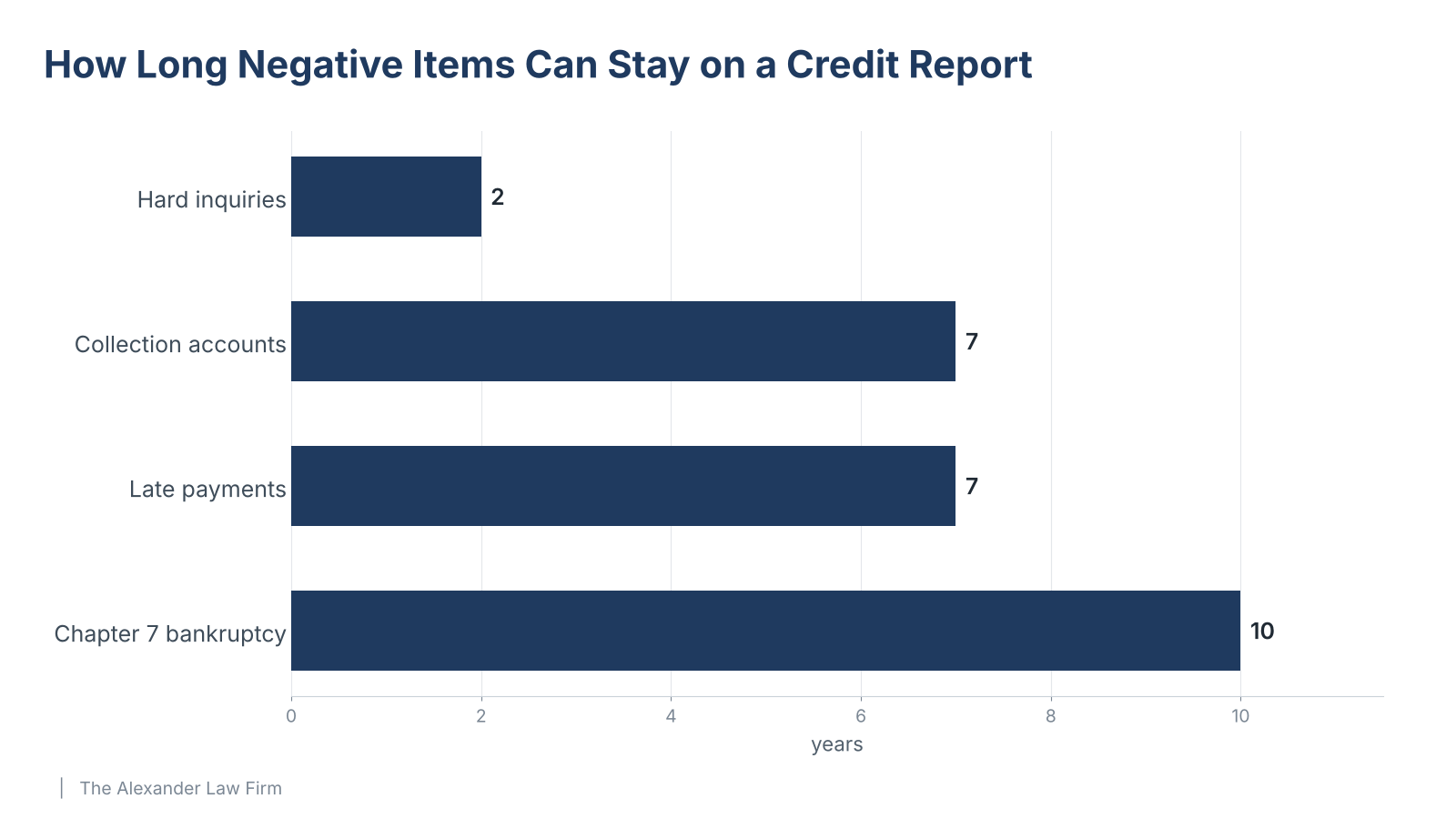
- Accurate collections can generally remain for up to seven years from the original delinquency.
- Some collectors agree to request deletion as part of a payment agreement, though they are not required to.
- The major bureaus have removed many paid medical collections and certain smaller medical collection debts from reports under their own policies.
- Newer scoring models may treat paid collections more favorably.
Get any deletion agreement in writing before paying.
Mistakes to Avoid
- Using online dispute forms that limit what you can explain or attach
- Admitting a debt is yours over the phone before reviewing the details
- Paying an old debt without understanding how it may affect the statute of limitations
- Relying on credit repair companies that charge upfront fees and promise guaranteed results
Written disputes with copies of your documents create the strongest record if a legal claim becomes necessary.
When Disputes Are Ignored
If the bureaus or the collector fail to conduct a reasonable investigation, keep reporting information they cannot verify, or ignore your dispute, you may have a claim under the Fair Credit Reporting Act. The law allows consumers to recover damages and attorney fees in many cases. Learn more about your rights under the Fair Credit Reporting Act and our credit reporting errors services.
Is It Worth Paying Off a Collection Account?
Paying an accurate collection does not automatically remove it, but it can still help. A paid collection looks better to many lenders; some newer scoring models ignore paid collections, and paying can stop further collection activity or a lawsuit.
Before paying, confirm the debt is yours, the balance is correct, and the account is not past your state’s deadline for a lawsuit. Ask in writing whether the collector will request deletion, and keep proof of every payment. If the account is inaccurate, dispute it first rather than paying a debt you do not owe.
Frequently Asked Questions
Can I remove a collection account from my credit report?
Yes, if it is inaccurate or cannot be verified. Accurate collections generally remain for up to seven years.
How long does a credit dispute take?
Credit bureaus generally must investigate within 30 days of receiving your dispute.
Does paying a collection remove it?
Not automatically. Some collectors agree to request deletion, and some bureau policies remove paid medical collections.
What if the collection is from identity theft?
You can file an FTC report and request that the bureaus block the fraudulent account.
Can I sue if a bureau will not fix an error?
Often yes, under the Fair Credit Reporting Act, which allows recovery of damages and attorney fees.
What is the 7-in-7 rule for debt collectors?
Federal rules generally presume a collector is harassing you if it calls more than seven times in seven days about a debt.
Can a collection be removed without paying it?
Yes, if it is inaccurate or cannot be verified. Accurate collections usually remain until the reporting period ends.
Talk to a Michigan Credit Reporting Attorney
The Alexander Law Firm helps Michigan consumers remove inaccurate collection accounts and other credit reporting errors. When you call 248-246-6353, our team will ask about the account, your disputes, and how the error has affected you, then explain your options. Learn more about our credit protection services.